Medical Science

  • Home

Volume 30, Issue 172, June 2026 (Forthcoming Issue)

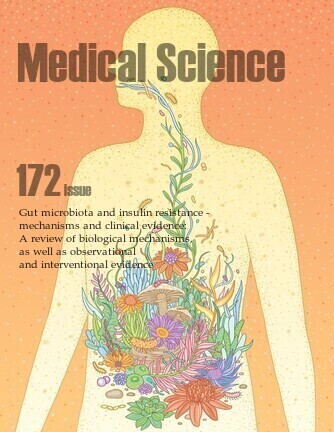
About the Cover

Background: Changes in the composition and function of the gut microbiota are associated with metabolic disorders, including lowered insulin sensitivity. Simple insulin resistance indices, such as HOMA-IR and TyG, are commonly used in population studies. Objective: A synthetic presentation of the evidence linking the gut microbiota with insulin resistance, as well as a discussion of biological mechanisms and clinical implications. Methods: This is a narrative review that includes observational and cohort studies, mechanistic studies, and microbiotamodulating interventions (e.g., supplementation, fecal transplants, and dietary interventions). Studies investigating the relationships between the microbiota profile, metabolome, and HOMA-IR and TyG values were included. Results: Various studies have shown a consistent association between specific changes in the microbiome and higher HOMA-IR and TyG values. Research has also suggested that microbial metabolites can cause insulin resistance, disrupted gut barrier function, and/or endotoxemia. Preliminary microbiota-modulating interventions show improvements in metabolic parameters; however, most trials are small and short-term. Conclusions: An integrated analysis of insulin resistance and its connections to the microbiota and metabolome can help clarify mechanisms and identify possible therapeutic targets. Further long-term studies are needed.


Previous

REVIEW

Gut microbiota and insulin resistance - mechanisms and clinical evidence: A review of biological mechanisms, as well as observational and interventional evidence

Natalia Kursa, Katarzyna Bielak, Adam Brożyna, Agnieszka Mackiewicz, Julia Witkowska, Krystian Woźniak, Ksenia Jakubiak, Mikołaj Kurczyński, Monika Krasoń, Aleksandra Pietrucień

Background: Changes in the composition and function of the gut microbiota are associated with metabolic disorders, including lowered insulin sensitivity. Simple insulin resistance indices, such as HOMA-IR and TyG, are commonly used in population studies

Medical Science, 2026, 30, e94ms3877

Abstract | PDF

The Effects of β2-Adrenergic Agonists on Skeletal Muscle Hypertrophy: A Narrative Review

Krystian Woźniak, Julia Witkowska, Monika Krasoń, Mikołaj Kurczyński, Ksenia Jakubiak, Natalia Kursa, Agnieszka Mackiewicz, Aleksandra Pietrucień, Katarzyna Bielak, Adam Brożyna

β2-adrenergic agonists (β2-mimetics) are widely used to treat pulmonary diseases such as asthma and chronic obstructive pulmonary disease (COPD), yet strong evidence indicates that they also affect skeletal muscle metabolism and growth.

Medical Science, 2026, 30, e95ms3891

Abstract | PDF

CASE REPORT

Recurrence of central serous chorioretinopathy following laser therapy - case report

Daria Valipur Kolti, Julia Kierner, Dariusz Valipur Kolti, Dominik Chrzanowski, Kacper Cholewiński

Introduction: Serous separation of the neurosensory retina is a hallmark of central serous chorioretinopathy. It is mainly caused by choroidal vascular dysfunction, which consequently leads to retinal pigment epithelium damage.

Medical Science, 2026, 30, e96ms3868

Abstract | PDF

REVIEW

Suzetrigine in Acute Pain Treatment: A Review of Current Evidence and Future Directions

Zofia Leżańska, Joanna Sowińska, Mateusz Kwiatkowski, Karolina Siemińska, Katarzyna Marcinkowska, Natalia Paluszkiewicz, Sandra Bryg, Aleksandra Cieślak, Sara Demkow, Emil Pałyga

Introduction: Acute pain is a constant reality in clinical practice. Patients come in because of their pain, surgeons cause it to happen, and a significant part of the care after surgery involves managing this pain

Medical Science, 2026, 30, e97ms3898

Abstract | PDF

Targeted Temperature Management After Cardiac Arrest: From Therapeutic Hypothermia to Active Normothermia

Zuzanna Żurawska, Sandra Prolejko, Weronika Kotnis

For a long time, targeted temperature management (TTM) has been considered a crucial neuroprotective intervention in post-cardiac arrest care. Once spontaneous circulation returns, a cerebral ischemia-reperfusion injury may occur.

Medical Science, 2026, 30, e98ms3860

Abstract | PDF

ARTICLE

Ageing and Cognitive Function: The Role of Physical Activity and Social Engagement

Katarzyna Piekarz, Izabella Prządo, Patrycja Patronik, Łukasz Karaś, Sabina Krupa-Nurcek

Introduction: Aging is a natural biological process that results, among other things, in cognitive decline. While some cognitive abilities based on experience may be retained in seniors, information processing and memory skills may decline

Medical Science, 2026, 30, e99ms3846

Abstract | PDF

REVIEW

Zuranolone as the First Oral Neuroactive Steroid for Postpartum Depression: Pharmacology, Clinical Efficacy, and Lactation Safety

Mateusz Kwiatkowski, Zofia Leżańska, Emil Pałyga, Joanna Sowińska, Aleksandra Cieślak, Sara Demkow, Natalia Paluszkiewicz, Katarzyna Marcinkowska, Karolina Siemińska, Sandra Bryg

Introduction: Postpartum depression is one of the most common mental illnesses associated with childbirth that occurs in about one out of every six mothers and has an impact on their offspring and relatives

Medical Science, 2026, 30, e100ms3903

Abstract | PDF

ARTICLE

Histopathological Characteristics of Pediatric Steroid-Resistant Nephrotic Syndrome in Sudan: A Single-Center Retrospective Study

Nahla Allam, Fatima Ali, Eltigani M.A. Ali, Yasir Mahgoup, Rasha Hussain, Nadia Aldawi, Mohmmed A. Mohmmedahmed, Bashir A. Yousef

Background: Steroid-resistant nephrotic syndrome (SRNS) in childhood is a significant therapeutic challenge and represents a high-risk factor for advancing towards end-stage renal disease (ESRD).

Medical Science, 2026, 30, e101ms3870

Abstract | PDF

REVIEW

Interactions between diet, gut microbiota, and immune response in inflammatory bowel disease

Katarzyna Jucha, Kacper Paczosa, Wiktoria Mikulska, Julia Wilanowska, Aleksandra Borkowska, Zuzanna Kawa, Patrycja Patronik

Inflammatory bowel disease (IBD) is a chronic disease associated with recurrent inflammation of the gastrointestinal tract. Recent studies indicate that diet and gut microbiota have an important influence on the development of the disease

Medical Science, 2026, 30, e102ms3895

Abstract | PDF
Creative Commons License

© The Author(s) 2026. Open Access. This article is licensed under a Creative Commons Attribution License 4.0 (CC BY 4.0).